Our Vision

Our Vision

Villages using RTI Act for crucial development information.
Farmers conserving traditional crop varieties.
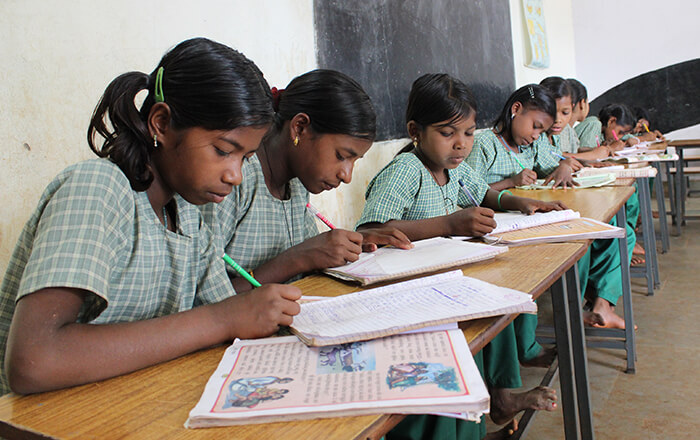
Tribal children reading fluently and studying further.
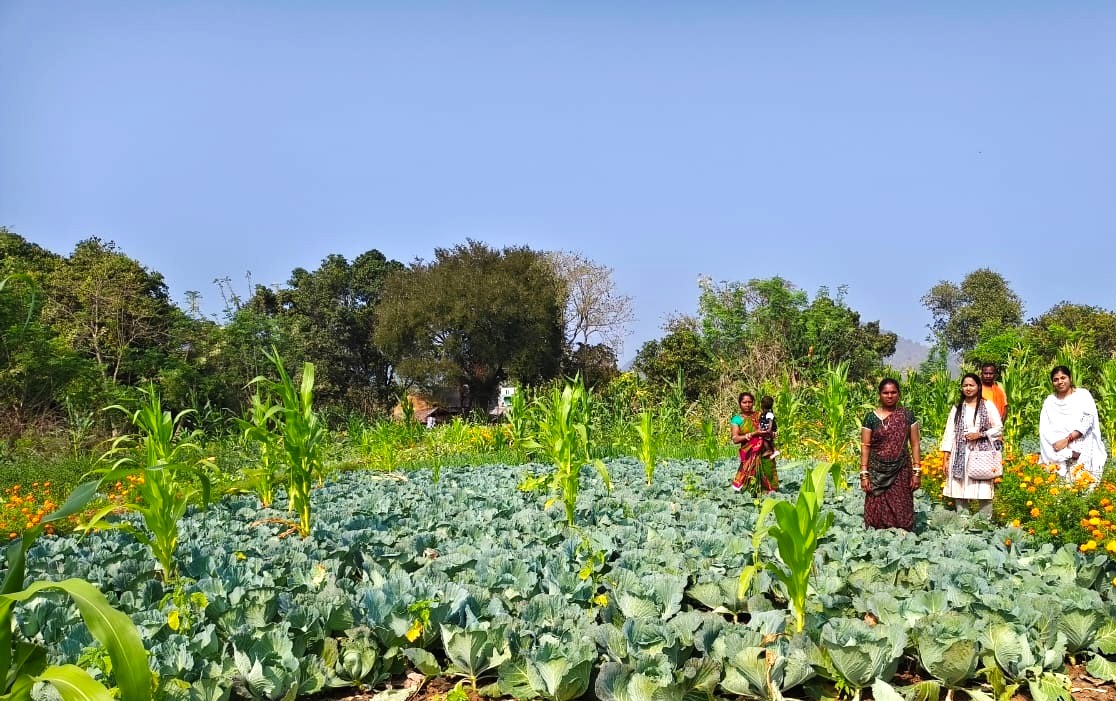
successful tribal Women Prograssive Farmers and entrepreneurs.
Tribal families self-sufficient with productive family farms.

Agragamee is
a not for profit organisation working for the poorest and most deprived sections
in of Odisha. Our approach combines socio-economic development with awareness and education
to build a synergy of food and voice, that has ensured self-reliance and self-sufficiency of
local communities. Our efforts have helped women leaders like Sumani Jhodia and Sukri Majhi
provide outstanding leadership to counter alcoholism and exploitation, students like Munni
Majhi and Mamata Jhodia shine in their studies and aspire for a better future and farmers
like Bhuban Jani adopt sustainable cultivation practices and increase their incomes five
times.
Our work has been facilitated by the generous support of national and
international philanthropies, government agencies, and concerned individuals who have stood
by us in our worst moments of crisis. This support has helped us address the most
challenging development issues and bring about tangible change in the lives of the poorest
people. Our interventions are in the following areas :


Mission

Vision

Objectives

Agragamee began work in 1981 seeking to understand the paradox of poverty and hunger in a land of abundance. The challenges were immense. There were few roads to reach the villages, hunger and epidemics were inherent part of the yearly cycle, a small community of contractors and landlords reigned supreme, and there was little or no respect for the law. Our work began with discussions and dialogues with the people, community leaders, elected representatives and Government functionaries. This helped us understand the complex multi-layered systems of exploitation and coercion that people suffered. It also opened up the doors of perception to local community members to concepts of justice, equality, human rights, freedom and began a process of empowerment.

Miss. Nirupama Jani is a rural woman entrepreneur from Kujajaniguda village of Tentulikhunti Block, Nabarangpur District. who transformed her livelihood through organic farming and production of organic agricultural inputs. Coming from a small farming family. After completion of training and exposure visit, Nirupama successfully applied the knowledge gauned to start a new unit of Organic Input Production. Now she started producing organic inputs locally, such as Vermicompost, Handikhata, Beejamrut, Nimastra, Angeyastra, Bhramhastra in a shed house size 15ft 25ft. And also she has engaged her brother and a woman in this unit.Now a days with a modest initial investment, she was able to produce 12qt vermicompost, 300itrs liquid manuals and earn profit of 22000/- within a short period of time.A comprehensive 10-day practical training program on Organic Input Production from 24 Nov. to 63d Dec. 2025 and a exposure visit on 04 Dec. 2026 was conducted by Agragamee under NABARD ERYA project, in which Nirupama has also participated. Initial support was provided to set a Vermicompost tank and liquid manuals like a poly vermicompost tank, 100ltr capacity water drum, 2kg earth warm from Agragamee to ensure successful implementation and sustainability of the practice.
The journey of Nirupama Jani highlights how rural women can become successful entrepreneurs through organic input production. Her success proves that small-scale organic enterprises can create big impact in villages.

Gananath Gouda is a 37-year-old small holder farmer from Patharlasa village in Nabarangpur district. He resides with his parents, wife, and two children, and manages 2 acres of agricultural land where he primarily cultivates paddy and maize. Despite consistent efforts, his agricultural income remained insufficient to meet the growing needs of his family. Hence he became a trainee under the NABARD supported ERYA (Encouraging Rural Youth in Agriculture) project. The training he received in fishery and poultry-based livelihood modules opened new doors. He was introduced to practical aspects of pond management, fish seed selection, basic book keeping, and integrated farming-knowledge that soon turned into action.
Gananath's journey illustrates the transformative impact of targeted training and field-level mentorship provided under the NABARD ERYA initiative. With continued support from Agragamee, he plans to further scale his integrated model and inspire other youth in his village to take up agri-allied enterprises.

Mr. Balaji Bisoi, a young and energetic farmer from a small village of Nabarangpur district, transformed his life through organic input production. With limited land and income. He decided to adopt sustainable agriculture practices and become self reliant. Balaji belonged to a farming family where traditional chemical-based agriculture was practiced. However, rising costs of fertilizers and declining soil fertility made farming less profitable. This motivated him to explore organic farming methods.A comprehensive 10-day practical training program on Organic Input Production from 24 Nov. to 93 Dec. 2025 and a exposure visit on 64 Dec. 2026 was conducted by Agragamee under NABARD ERYA project, in which Balaji Bisoi has also participated. Initial support was provided to set a Vermicompost tank and liquid manuals like a poly vermicompost tank, 100ltr capacity water drum, 2kg earth warm from Agragamee to ensure successful implementation and sustainability of the practice.
After completion of training and exposure visit, Balaji successfully applied the knowledge gained to start a new unit of Organic Input Production. Now he started producing organic inputs (Vermi-compost & Handikhata) locally in a asbestos shed house size 20ft 25ft. In this shed house he constructed 12 nos of concrete vermicompost tank, And also he has engaged a poor boy in this unit.Balaji Bisoi's journey shows that young farmers can achieve success through innovation and sustainable practices. His work in organic input production has made him financially environmentally responsible.

Mrs. Kamala Bhatra a rural woman from Sanadahibhata village of Nandahandi block was mainly dependent on agriculture and daily wage labour for her family's livelihood. Due to limited income opportunities, she wanted to start a small business that could be managed from home and support her family financially. At that time, she got the opportunity to participate In a Mushroom Cultivation Training Programme organized by Agragamee and supported by NABARD. Initially, she had very little knowledge about mushroom farming, but but she she showed sho great interest and actively participated in all the training sessions. A comprehensive 19days hand on training. program on commercial mushroom cultivation was conducted on 19,12,2924 to 38.12.2624, covering critical components omponents such as species selection, paddy straw based bed preparation, hygiene protocols, harvesting methods, marketing and book keeping The training empowered participants many without prior experience by equipping them. practical knowledge. Initial support was provided to set up 166 mushroom beds with ongoing technical guidance from Agragamee's field team to ensure successful Impsernentation and sustainability of practice.
This year Kamala prepared 296 nos of oyster mushroom bed by investing her own money and she har harvested 413 kg of mushroom and she got profit of Rs 89,996/- to 62086/- mproved the financial condition of her family through regular income generation. Increased her confidence, leadership, and decision-making capacity Inspired other women and SHG members in the village to adopt mushroom cultivation.

Tularam Jani, is a farmer, he faced verious types of challengs in sustainable income through Animal Husbandry/Farming and he also want to become a self-employed successful man. Through NABARD'S ERYA Project, Agragameee reached out to farmers like to bridg the gap in livelihood oppottunities and faster enterpreneur skills. Ing 1. A 19-days Skill Development, Practca program and one day Exposure Vis was organized on Goat Farming from 2718825 to 95.11.2025 for rural farmers 2. The Traning focused on Goat Fe Vaccination, Breeding and Disease management 3. The training helped improve liveliho opportunities and encouraged rural entrepreneurship among Rural youth.
Creation of self-employmen tunities Improvement in household economic condition Regular source of income the ughate of goats Better knowledge of scientific practices farming Availability of organic man agriculture use Improvement in nutrition through milk and meat products Reduction in unemployment in rural areas Development of small-scale rural Better savings and financial stability entrepreneurship Encouragement for other villagers to adopt goat farming.

Krupasindhu Bhatra, is a farmer, he faced verious types of challengs in sustainable income through Agriculture and he also want to become a self-employed successful man. Through NABARD'S ERYA Project, Agragameee reached out to farmers like to bridg the gap in livelihood oppottunities and faster enterpreneuri skills. A 16-days Skill Development, Practical training program and one day Exposure Visit was organized on Nursery Raising and Management from 02.04.2025 το 11.94.2025, emphasizing key aspects such as species selection, Media making, Grafting etc... Lack of stable income from traditional farming. The training empowered participants with no prior business experience to gain practical skills and confidence.
After proper nursery raising and management, the following results are obtained: Health and strong seedling are produced Uniform growth of seedlings is achieved Seedling become ready for transplanting on time Less mortality rate after transplanting Seedlings remain free from pests and diseases Good root development and better plant establishment.The way forward on nursery means the future steps and improvements needed to make nursery raising more successful, healthy and profitable. Goal setup for nest Season is a large nursery, then the main focus should be on plannting, infrastructure, quality seedling production and market supply.

Subarna Nayak, is a House Wife, she faced challengs in sustainable income through Agriculture and she also want to become a self-employed successful women Through NABARD'S ERYA project. Agragamee reached out to farmers like her to bridg the gap in livelihood opportunities and foster enterpreneurit skills.A 10-days Skill Development & Practical training program was organized on Nursery Raising and Management from 92.94.2925 to 11.04.2925, emphasizing key aspects such as species selection, Media making, Grafting etc Lack of stable income from traditional farming. The training empowered participants with no prior business experience to gain practical skills and confidence.
Nursery infrastructure and plant stock were successfully developed. Healthy plants/saplings were raised and maintained for future commercial sale. The activity created growing biological stock/inventory even though no sales occurred during the year. Business foundation and customer base preparation started.Nursery business had nursery raising and management activities but no plant sales during the previous financial year, the way forward depends on whether you are asking from: Gole of this year Improve the sales channels local landscapers, housing societies garden contractors, weekly plant exhibitions and garden stores.

In the quiet village of Bijapadar, nestled within the Tentulikunti block used to story of exhaustion. For Anji Santa lookout saw a landscape into a sull, repetitive brown. Like handscape fading into a soil, lis neighbours, ant the cycle of maize mono-cropping-relentless chemical fertilizers and left soll gasping for life. "The land was tired, and so was I," Anji ref-those lean years. "We poured chemicals into ground and money intor into the markets, but the harvest never seemed. We were working for the chemicals, not for ourselves."
Anji Santa's one-acre plot has been acomg classrooment for Bijapadar. His success the myth, the only way to achieve yields. She has by honoring the environment honors for the farmer. "I used to look at thrir acree, Anji saying amidst a lush canopy. 'Now, I look at a secy Legace stopping fighting matturd. We have stopped to leave started walling with in small patch of, we have found our dignity again." Through the collaborative efforts of Agragamee Foundation, Anji's journey from a struggling laborer of natural farming serves as a powerful testment: When heal land, the land heals us.

Economic empowerment of rural women through sustainable livelihood initiatives has become a key driver of rural development in Nabarangpur district. In Hatipakhna village, the goatary farming initiative implemented by SGF Agragamee with the support of ITDA Nabarangpur has emerged as a successful livelihood model for women members of Janekai SHG. Under this programme, SHG members received goat units along with training on scientific goat rearing, feeding practices, shed management, disease prevention, and animal healthcare. Veterinary support and awareness sessions were also organized to strengthen livestock management practices and reduce animal mortality. The women members actively participated in all programme activities with dedication and collective responsibility.
The programme significantly enhanced the confidence decision-making capacity, and economic participation of SHG women. Members developed better awareness regarding livestock care and disease management, while community cooperation and collective action also strengthened within the village. Today, the goatary farming initiative in Hatipakhna village stands as an inspiring example of women-led livelihood development. With continuous support from SGF Agragamee and ITDA Nabarangpur, the initiative has contributed towards sustainable rural development, self-reliance, and long-term economic empowerment of SHG members and their families.

Kharkiguda is a small village under Patraput Gram Panchayat in Tentulikhunti Block of Nabarangpur District, Odisha, located about 25 km east of the district headquarters. The village is home to Kondh (ST) and Harijan (SC) communities, with a population of around 412 people across 82 households. Total area of Millet Cultivation covered under SAA – 34 acres Total No. of Millet Growers – 31 nos. Traditionally the women farmers of Kharkiguda village used to live off their millet fields. Now, however this knowledge of millet farming has been lost over time in addition, climate change with uncertain rains has worsened the situation. The Shree Anna Yojana, implemented by Agragamee introduced improved methods of millet cultivation to these women. Inspired by this, all the women farmers came together to cultivate millet (Finger Millet) in one common land of 16 acres out of total 34 acres.
Our village mainly relies on millets like – Finger Millet and Little Millet as our staple food, and we have shifted our focus towards it, Damaya Majhi added. In spite of strong influence of hybrid Maize and Paddy in the region the farmers of our village have been cultivating millets, she added. This kind of act have been united and inspired us to keep cultivating Millet as prime part of our life in terms of Food, Nutrition and Livelihood security. We will be cultivating Millets and expand the area for larger impact in the community. Following the efforts of these women millet growers, many farmers in the neighboring villages now have started to grow millets by replacing Maize. The majority of farming now using organic inputs like Handi Khata, Jibamruta and Neemastra, which lowers production costs, they claimed.

Bhunja Jani, a smallholder farmer, in Padaaunli village, PO - Lamtaguda, initially practiced conventional farming using chemical fertilizers and pesticides. However, his production declined, even with rising input costs. The BPKP programme encouraged him to transition to natural farming. The training programs, workshops, and exposure visits helped him gain indepth knowledge of indigenous farming inputs, natural soil enhancement methods, and eco-friendly pest management practices including Jeevamruta, Bijamruta, Handikhata, Agniastra, Brahmstra, and Panchgavya.
Within a short period of time, Bhunja Jani's production began going up, and traders came straight to his farm to buy his produce. The family also became much healthier. Bhunja Jani's successful adoption of Bharatiya Prakritik Krushi Padhati demonstrates the transformative potential of natural farming. Through dedication, skill-building, and a strong commitment to ecological practices, he has enhanced soil health, lowered farming costs, and produced high-quality, chemical-free food. His journey offers valuable inspiration to other farmers seeking sustainable and regenerative agricultural alternatives.

We went to the Agriculture Department office in our bus and entered in two lines. The officers were very happy to see us. The Agricultural Officer, Jitendra Sir asked us, “Children, what vegetables do you eat at home?” and explained, we should wash all we buy from the market properly before we cook them to avoid stomach problems.
Then he showed us a compost pit, and we met farmers who were visiting the office. We learnt learned that if earthworms are present in the soil, the soil remains fertile. If there are no earthworms, the soil becomes infertile. We also went to see how Jitendra Sir does farm. We were very happy to visit the agricultural office. We listened attentively to everything Jitendra Sir was saying and understood it well. He told us that if we farm without using chemical fertilizers, the soil stays healthy. But using machines for ploughing can damage the soil. Using a traditional plough does not harm the soil. If we plant saplings without fertilizers, the paddy grows well. Even watery vegetables grow well without using fertilizers. Jitendra Sir explained all this to us with great care, and we listened with full attention. As it was getting quite hot, we all got into the bus and returned to school.

Land Size – Up Land – 2.3 acres, Low Land – 0.70
acres
Occupation –Agriculture
Village – Hiruguda, G.P. –Gouda Deopali,
Block –
Tentulikhunti, Dist. –Nabarangpur
Raibaru's father shifted with his family to
Hiruguda village in 1985, being displaced by the
construction of Indravati Dam.
He used to mono-crop hybrid paddy on 30cents of
low land and cultivate millets and niger on 75cents
of upland. He had an annual income of R.8500.00
After Family Farm establishment, he began to cultivate aromatic local paddy varieties on 70cents of low land. On his upland, he developed a fruit orchard of mango, cashew and jackfruit, and also planted other forest species for livelihood needs. He also took up intercropping of millets and vegetable crops. Outcome: He got a yield of Kandul – 125 Kg., other pulses – 110 Kg., Finger Millet – 150 Kg., Little Millet – 100 Kg., Foxtail Millet – 85 Kg., Pearl Millet – 60 Kg. and Sorghum – 55 Kg. and Vegetable – 845 Kg, giving him a net income of Rs.28,750.00. This helped his son to discontinue the distress migration, and has also encouraged Raibaru to establish family farm on more area of his land.
Outcome: He got a yield of Kandul – 125 Kg., other pulses – 110 Kg., Finger Millet – 150 Kg., Little Millet – 100 Kg., Foxtail Millet – 85 Kg., Pearl Millet – 60 Kg. and Sorghum – 55 Kg. and Vegetable – 845 Kg, giving him a net income of Rs.28,750.00. This helped his son to discontinue the distress migration, and has also encouraged Raibaru to establish family farm on more area of his land.

The Farmers' Field School training programs, in Kashipur and Koraput districts was a comprehensive initiative aimed at promoting sustainable, organic agriculture among rain-fed tribal farmers. Organized by Agragamee under the Signet Project, the program focused on empowering farmers with knowledge of eco-friendly farming practices, seed conservation, and organic manure production. Participants, primarily Eco-Leaders and farmers, received training on grafting, nursery management, crop planning, zero-tillage, and the use of organic inputs such as Jivamruta and Bijamruta.
Demonstration plots were established on Eco-Leaders' farms to serve as Farmers' Field Schools, enabling practical learning and wider dissemination of best practices. The program also emphasized the importance of rain-fed agriculture challenges, such as water conservation and soil health, advocating for organic methods to ensure sustainability and reduce reliance on chemical fertilizers and pesticides. Through capacity-building sessions, farmers learned about creating green boundary fencing, managing plant protection issues, and exploring alternatives like bamboo, Karanja, and Arjuna trees for multipurpose boundary fencing. The initiative aimed not only to improve crop yields but also to enhance farmers' income and resilience.The program also included discussions on supporting farmers with seedlings, support services, and developing model farms.